November 11, 2026
Vietnam Cargo Tricycle: Payload, Range, Depot
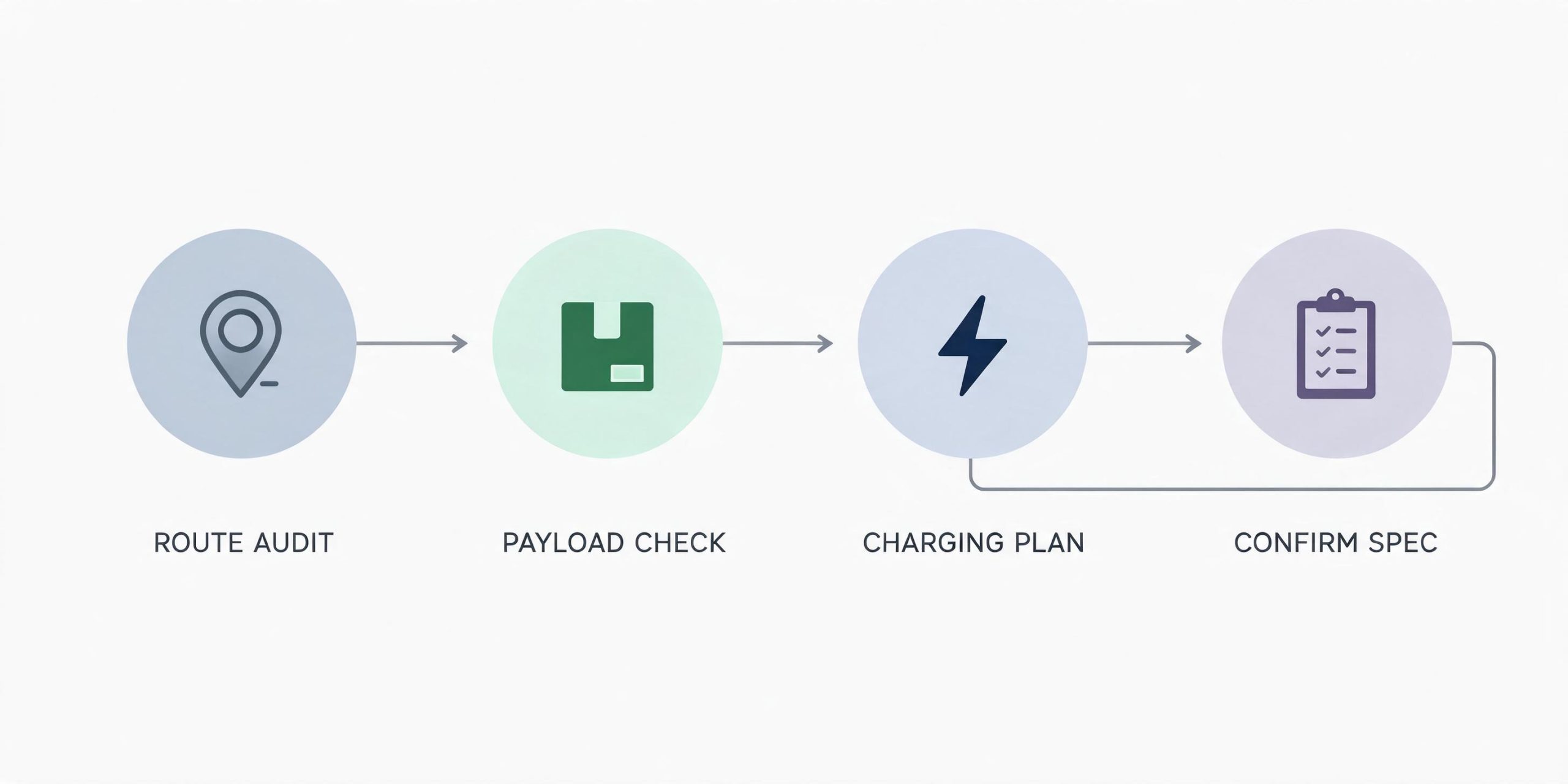
Consider a hypothetical freight and logistics operator in Vietnam running daily last-mile parcel, building-material and mixed-goods routes from a single depot. Lanes are narrow, stops are frequent, loads change by day, and every vehicle charges in the same shared yard within a short window. Treat this as a planning scenario rather than a documented case. An electric tricycle for cargo transport fits this work only when rated payload, cargo box volume and battery match that route — not when the FOB price is lowest. The key decision comes before any quote: audit the route, size the load unit, plan the charging window, then confirm the configuration.

Freight and logistics duty: what a Vietnam depot route demands
This is not a single-shift, single-load job. A trike may carry parcels in the morning, bagged cement at midday and mixed goods on a rural link in the afternoon, so the specification has to survive the worst day, not the average one.
Vietnam's three-wheeler market is seeing growing interest in electric models for cargo transport [Source 1]. That is why depot planning belongs in the buying decision, not after it.
Requirements checklist before you request a quote
Use this checklist to turn the hypothetical depot route into a specification:
- Route: daily kilometres, number of trips, stop frequency, gradients and road surface.
- Payload: heaviest load unit, typical load, and the margin you need above it.
- Cargo box: internal length, width, height, access openings and tie-down points.
- Charging: charger type, charging time, available depot power and vehicles per window.
- Loading: manual, pallet or ramp access, and whether side or rear doors are needed.
- Compliance: registration and homologation questions for the relevant Vietnamese authority.
- Documentation: warranty, spare parts, certificates and final pricing basis.
Rated payload and cargo box size
Rated payload is a ceiling, not a target. Start from the heaviest load unit you actually move, add a practical margin, and specify above that figure. Then measure the cargo box internally — side-panel height and access openings decide whether a load goes in fast or gets repacked at the kerb.
One mid-duty specification illustrates the level of detail to confirm. The Yusheng ZM-YS-16D is a verified 1500 kg cargo build worth considering when the route and depot can support that duty level; confirm battery, charger, box access and local registration before ordering.
| Specification | Verified figure | Buyer check |
|---|---|---|
| Overall dimensions | 3050 × 1220 × 1435 mm | Fits the narrowest lane, gate and loading bay on the route |
| Cargo box | 1600 × 1150 × 900 mm | Measure the real load unit, not the vehicle footprint |
| Wheelbase | 2080 mm | Turning behaviour at tight corners and depot entries |
| Motor power | 1000 W | Gradients and average load on the daily route |
| Load capacity | 1500 kg | Rated ceiling — plan below it with a margin |
| Battery options | 60/45 V/Ah | Match to daily kilometres and the charging window |
Specifications are model-specific. Do not apply these figures to any other model.
Daily route length and duty cycle
Map the workday before comparing batteries: daily kilometres, number of trips, average load, stop frequency, gradients and surface. Frequent stops, loads and mixed surfaces all draw energy differently from a steady run, so a quoted range rarely survives a real freight route unchanged [Source 2].
Confirm the battery option and motor against your own duty cycle, and never carry one model's range figure across to another model.
Charging time and depot planning
Confirm charger type, charging time and the depot's available power capacity first. Then work out how many vehicles can charge per window and how peak freight hours are protected. Battery capacity should follow the charging schedule as well as the daily kilometres — a large pack that cannot recharge in time is dead weight.
Fit and selection: matching the trike to the depot route
Check overall width, wheelbase, tyres and braking layout against the lanes you actually drive. An oversized body that cannot turn cleanly in a narrow alley costs more per delivery than a smaller one that can. For harvest-season rural cargo, see Farm Cargo Trike Specs for Vietnam Harvests.
Loading and unloading method
Decide whether loading is manual, pallet-based or ramp-based, then confirm side or rear access, internal height, panel height and tie-down points with the supplier. Poor access adds minutes at every stop and quietly cuts daily utilisation.
Specification and documentation checks for Vietnam buyers
TrikeLine's documented support terms cover spare parts shipped with the next order, repair drawings, parts lists and video guidance. OEM/ODM customization of colours, battery capacity, cargo box, seating, logos, instruments and lighting options is available subject to confirmation before production. Its range covers 41 electric cargo, passenger, agricultural, low-speed sightseeing, off-road and special-purpose vehicles.
| Check | What to confirm |
|---|---|
| Registration / homologation | Ask the relevant Vietnamese authority; do not infer road legality from a supplier certificate image |
| Certificates | Only a facility-level certificate collection image is available; individual names, numbers, issuers, scope and validity should be confirmed separately |
| Warranty | Core electrical parts 12 months; lead-acid batteries 6 months; tyres, brakes and lamps excluded |
| Spare parts | Shipped with the next order, plus repair drawings, parts lists and video guidance |
| Pricing | FOB prices are indicative, per unit and excluding batteries; final price depends on configuration, quantity and destination |
FAQ
How much payload should I specify for an electric cargo tricycle?
Start from the heaviest load unit you actually move, add a practical margin, and specify a rated payload above that figure — never at it. Then check the cargo box internally against that load unit. A rated figure is a ceiling, not a daily target; running at the limit every trip shortens component life and slows loading.
Next step: send route and load data for configuration confirmation
Send daily route length, payload range, cargo box dimensions, loading method and depot charging window, and TrikeLine can confirm the configuration against your duty cycle rather than a brochure.
Contact: Helena.jia@dingsel.com · +86 151 56068111 · WhatsApp +852 5345 8005.
Sources
[Source 1] https://www.tycorun.com/blogs/news/top-5-electric-tricycle-manufacturers-in-vietnam [Source 2] https://www.damius.com/en/how-to-choose-your-electric-cargo-tricycle/
Useful pages on our site
- High-Pressure Cleaning Vehicle
- Mini Falcon Off-Road Buggy ()
- S1-6 Mini Sightseeing Vehicle ()
- S1 Second-Generation Scenic Vehicle ()
Talk to DINGSEL · TrikeLine
Request a quote, configuration options or the latest export spec sheet from DINGSEL · TrikeLine. Email Helena.jia@dingsel.com | WhatsApp +852 5345 8005.