November 13, 2026
Resort Electric Sightseeing Shuttle: Buyer’s Guide
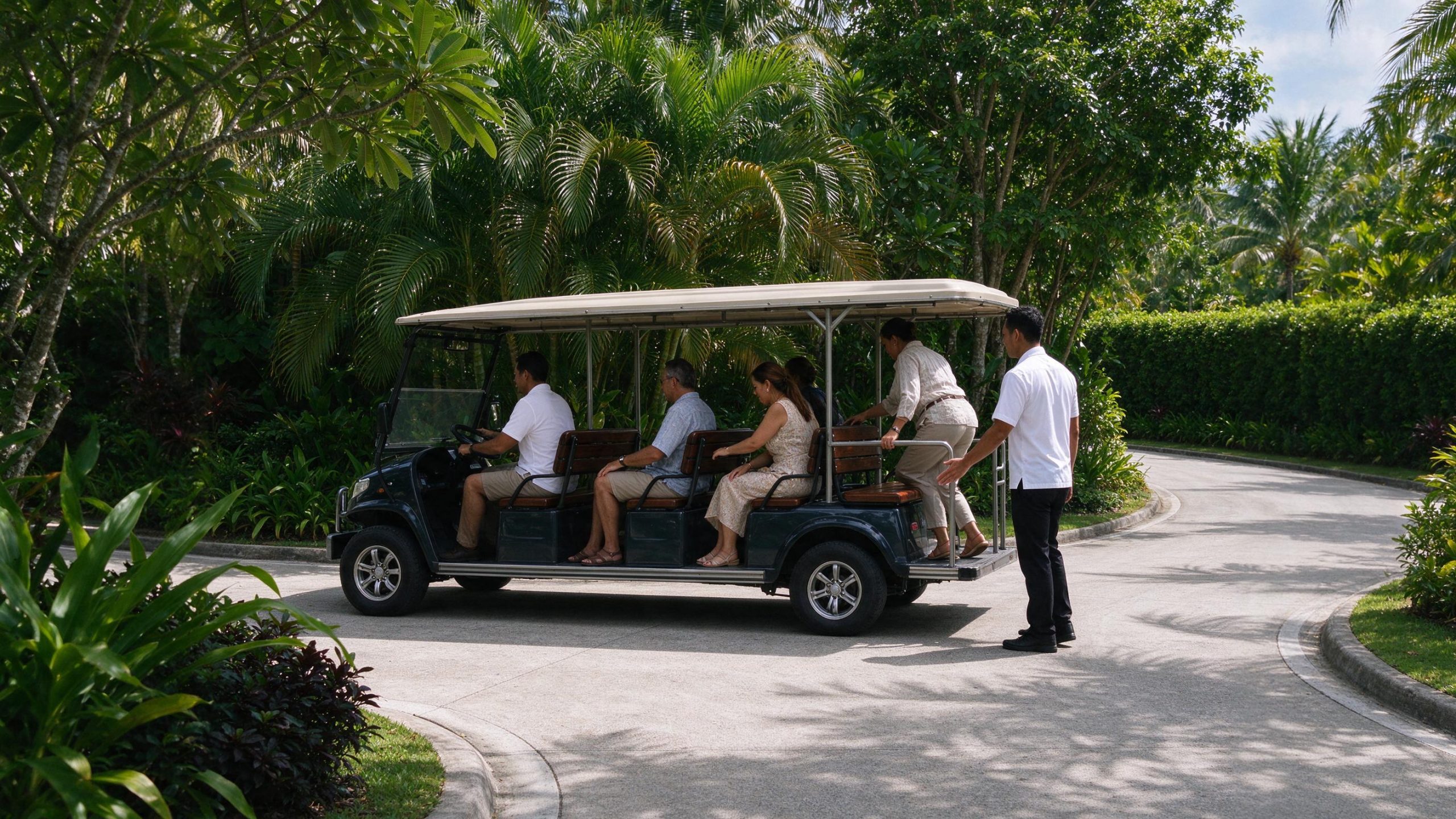
A resort loop in Palawan, a hotel driveway in Cebu or a beach-transfer path in Bohol shares one duty: short, repeated guest trips inside a boundary the operator controls. Guests board with beach gear and luggage, expect shade and a seat, and the vehicle charges overnight in a service yard. An electric sightseeing vehicle for passenger transport fits when the site is closed and the loop is measured. It replaces diesel noise and fumes at the lobby door with quiet, fume-free movement. Match seat count, canopy and battery capacity to the real loop, guest mix and charging window—not brochure range.
Daily route length and duty cycle
Walk the route with a measuring wheel or phone app and record loop length, trips per day, hours in service, stop count, average passenger load, gradients and surface. That record, not a datasheet headline, is your duty cycle.
Range varies by model; battery capacity, motor power, weight, load, terrain, speed and heat all matter. Ask for the exact configuration's battery capacity and route assumptions behind any range figure, compare with your measured duty cycle, and keep a buffer for heat, full loads, gradients and battery age.
Charging time and depot planning
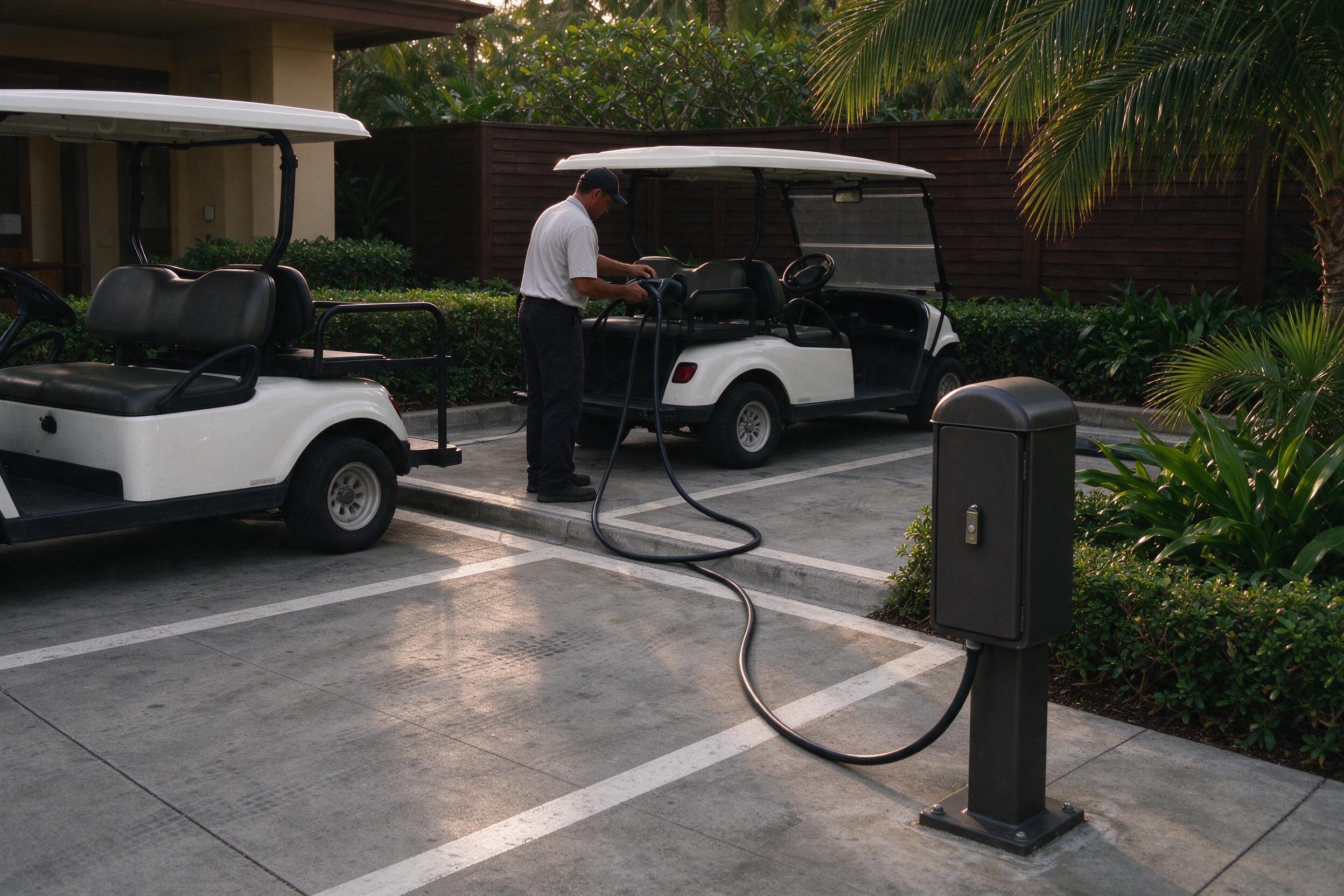
Charging time depends on battery capacity and charger rating for the exact model; confirm both before committing. A large pack on a small charger means a long night; a pack sized to the loop may recharge between shifts.
Plan the depot as part of the site: overnight charging bays, rotation between vehicles, a spare for peak days, ventilation, dry cable management, turning space for reversing out, and rain protection over outlets. Check the yard's supply and whether the bay floods in the wet season.
Seating layout and passenger comfort
Match seats to the guest mix, not the maximum the body can hold. Bench seating moves groups quickly; individual seats with handholds suit older guests and short hops. Check step height for guests in sandals or carrying beach bags, legroom for taller passengers, grab handles at every entry, and how wet guests will sit.
Treat canopy coverage, side curtains, ventilation and wipe-clean upholstery as buyer checks: ask how each performs at midday heat and in sudden rain, and confirm drainage and cleaning. Confirm luggage space, and never exceed the stated seating capacity.
Route profile and passenger comfort
Gradients, surface and stop frequency shape the driving experience. Check braking duty on slopes, suspension over patched paving or gravel, tyre type for the site surface, and noise at low speed so the driver can talk to guests.
Four-wheel low-speed sightseeing vehicles suit guest transfer on resort loops and hotel driveways. Three-wheel passenger tricycles and mini sightseeing cars suit short internal loops in estates, terminals and parks—always inside private circulation the operator controls.
Site requirements checklist
- Measured loop: length, trips per day, hours, stops, average load, gradients and surface.
- Charging: available power, charger rating, overnight window, bay dimensions and drainage.
- Guests: seat count and layout, step height, handholds, luggage space and wet-weather seating.
- Weather: canopy, side curtains, drainage, corrosion resistance and upholstery.
- Site access: gate, ramp, turning geometry, parking, reversing space and flood risk.
- Documents: model-specific battery and charger data, warranty, spare parts, drawings and video guidance.
Seasonal demand and weather protection
Peak-season effects are operator-specific: group sizes may rise, trips may stack up, and the vehicle may run from early morning to late evening. Confirm your own seasonal duty rather than assuming a pattern. Rain and heat are daily conditions, so canopy coverage, side curtains, drainage, corrosion resistance and upholstery choice can affect uptime as much as the motor.
Fleet policy is also shifting. Under EVIDA (Republic Act No. 11697), industrial and commercial companies including tour agencies and hotels must ensure at least 5% of their fleet, owned or leased, is electric under the CREVI framework [Source 1]. Bacolod City's first EV Summit, opened on 26 October 2026, drew EV manufacturers, suppliers, financial institutions and transport groups around sustainable mobility [Source 2].## Verified specification table
One four-wheel low-speed sightseeing example from the Q10 family shows the detail a buyer should request.
| Check | Verified example | Why it matters |
|---|---|---|
| Overall dimensions | 3750×1360×2030 mm | Check depot access, turning space and parking bay fit. |
| Tyres | 23×10-14 | Confirm replacement availability and suitability for the site surface. |
| Motor power | 5000 W | Match to route profile, passenger load and gradients. |
| Seating capacity | 6 persons | Compare with actual guest group size and comfort expectations. |
| Wheelbase | 2400 mm | Check ramp, gate and turning geometry inside the private site. |
| Brakes | Four-wheel disc brakes | Consider stopping duty on slopes and frequent stops. |
Example only. Specifications are model-specific; do not apply one model's data to another.
What to put in the RFQ and next step
Send the supplier a short pack: route map with loop length and gradients, daily trips and hours, peak passenger counts, available charging power, depot dimensions and turning space, weather exposure, desired seat count, and documentation to review.
Ask for model-specific battery capacity, charger rating and charging time, warranty terms, spare parts list, repair drawings and video guidance. The four-wheel low-speed range covers sightseeing, utility and cargo variants, with factory-direct customisation of colours, battery capacity, seating and logos subject to confirmation. Core electrical parts carry a 12-month warranty and lead-acid batteries 6 months, wear parts excluded; overseas support is spare parts with the next order plus repair drawings and parts lists. Pricing depends on configuration, order quantity and destination.
Next step: shortlist the category and request a closed-site configuration review against your measured loop, and verify the current site documentation before you commit.
FAQ
How far can a passenger electric tricycle go on one charge?
No single figure holds across models. Battery capacity, motor power, weight, load, gradients, surface, speed and heat all move the answer, so range is a property of the exact configuration, not the category. Measure your loop first, then ask for that configuration's battery capacity and the assumptions behind any range claim, and keep a reserve for heat, full loads, hills and battery age.
How long does a passenger electric tricycle take to charge?
Charging time is set by the model's battery capacity and the rating of the charger you install, so confirm both together. A large pack on a small charger can run all night; a pack sized to a measured loop often recharges inside the overnight window. Ask for the charger recommendation for the model you shortlist and check that the yard's supply supports it.
Sources
- [Source 1] Republic Act No. 11697 (Electric Vehicle Industry Development Act), s.16 — https://lawphil.net/statutes/repacts/ra2022/ra_11697_2022.html
- [Source 2] Philippine News Agency, Bacolod EV summit — https://www.pna.gov.ph/article/bacolod-ev-summit-highlights-push-for-sustainable-mobility-transport
Talk to DINGSEL · TrikeLine
Request a quote, configuration options or the latest export spec sheet. Email Helena.jia@dingsel.com | WhatsApp +852 5345 8005.