November 24, 2026
Gated Community Low-Speed EV Shuttle
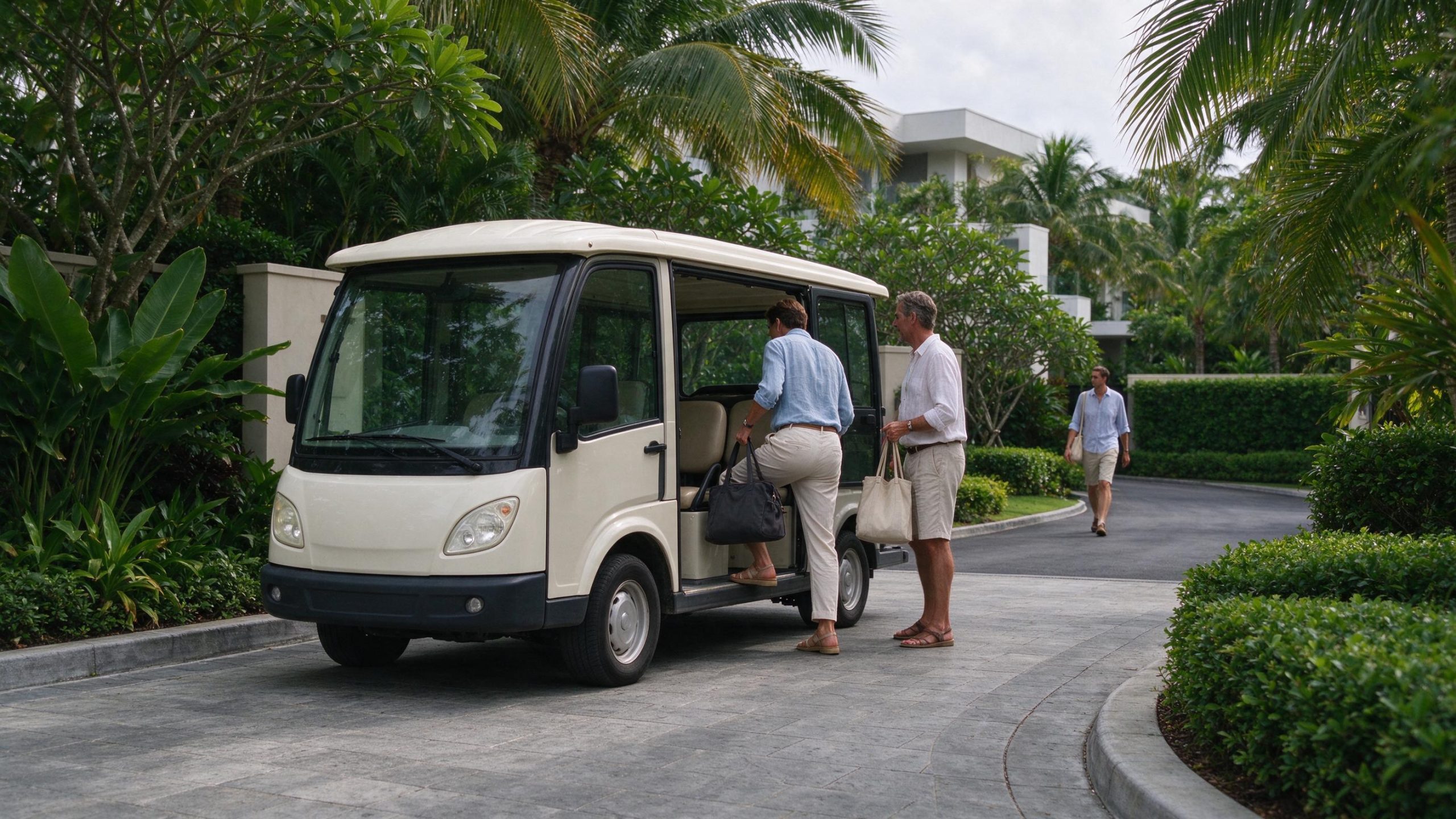
A gated community office or contracted shuttle team can use a low speed electric vehicle for resident loops inside the estate boundary. TrikeLine is a closed-site electric vehicle sourcing line for importers, dealers, fleets, and project buyers, offering a 41-vehicle range. The key is matching seat count, canopy, depot space, turning radius, and after-sales support to the planned route.
Gated Community Shuttle Guide: Choosing a Low-Speed Electric Vehicle
If the route links entrance, clubhouse, amenities, parking, and blocks, confirm stop frequency, peak passenger counts, and demand during school runs, events, or arrivals. The vehicle should move passengers safely at low speed, provide weather protection where expected, and return to a predictable charging point.
If the estate or operator is a commercial fleet owner, EVIDA sets a 5% EV fleet requirement [Source 1]. This guide focuses on closed-site fit.
What the Route Demands from a Resident Shuttle
Inspect the route for paved roads, slopes, speed bumps, wet surfaces, and tight turns. Verify dimensions, turning radius, ground clearance, braking behaviour, and tyre suitability. Luggage or supplies may accompany passengers, so seating and storage matter.
Stable handrails, adequate legroom, and simple passenger flow may help reduce dwell time. A comfortable shuttle may improve utilization without adding public-road risk.
Canopy and Weather Protection for Low-Speed Electric Vehicle Rain Use
Rain and heat may shape the specification. For low speed electric vehicle rain use, ask for a full canopy, side weather protection where needed, covered seating, floor drainage, slip-resistant flooring, and lighting. Check corrosion resistance for frames, fasteners, and electrical connections.
A covered depot may help keep seats dry and support charging. Confirm the canopy does not block boarding, reduce visibility, or interfere with speed bumps and gates.
Charging Time and Low-Speed Electric Vehicle Depot Planning
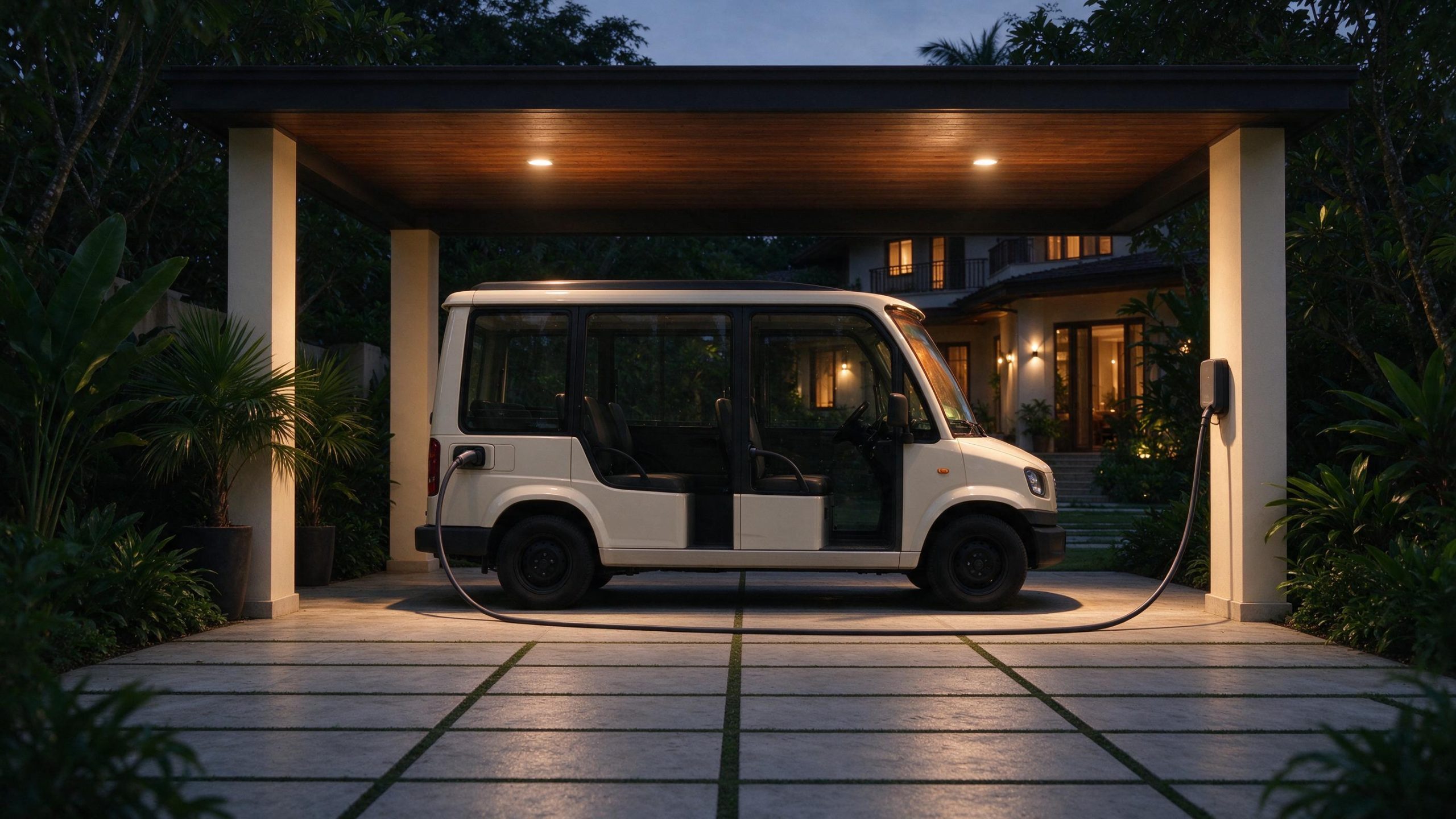
Plan overnight charging as a default method, then confirm battery capacity, charger type, site power, cable routing, and parking location. Charging time depends on battery size, charger output, state of charge, and supply.
A depot should allow turning, safe cable placement, weather protection, and maintenance access. If overnight space is limited, specify battery and charger requirements early, then verify the electrical point with the property team.
Seating Layout and Low-Speed Electric Vehicle Seats for Resident Comfort
Seat count is only the first check. Confirm low speed electric vehicle seats, passenger flow, step height, handrails, backrest support, and luggage space. For resident loops, clear entry and exit often beats maximum seating.
OEM/ODM customization confirmed by the manufacturer may include colours, battery capacity, cargo box, seating, logos, instruments, and lighting, subject to confirmation before production. Document each option in the final specification.
Resident Boarding and Accessibility Inside the Estate
Boarding should happen at defined points such as the entrance, clubhouse, and drop-off zones. Verify door height, step depth, handrail position, and whether residents with bags or mobility aids can board without assistance. Internal speed limits, stop placement, and driver training matter as much as hardware.
This is closed-site duty only. The article does not claim public-road legality, registration, type approval, or homologation. The operator should set site rules for speed, routes, parking, charging, and loading.
Buyer Requirements Table
| Requirement | What the buyer should verify | Verified basis |
|---|---|---|
| Passenger capacity | Seat count, flow, luggage space, step height, handrails | Four-wheel low-speed passenger or sightseeing vehicles are within a 41-vehicle range. |
| Weather protection | Canopy, drainage, slip resistance, lighting, covered parking | Customization may include seating, instruments, and lighting, subject to confirmation. |
| Charging depot | Battery capacity, charger, site power, cable routing, overnight window | Battery capacity can be customized, subject to confirmation. |
| Customization | Colours, logos, cargo box, seating, lighting, documentation | OEM/ODM customization confirmed by the manufacturer may cover colours, battery capacity, cargo box, seating, logos, instruments, and lighting. |
| After-sales | Warranty scope, wear parts, spare parts, repair guidance | Core electrical parts have a 12-month warranty; lead-acid batteries 6 months; wear parts excluded. Next-order parts, drawings, lists, and video guidance may be supported. |
FAQ: Low-Speed Electric Vehicle Questions for Gated Communities
Is there a mini electric car for adults that is street-legal?
For this scenario, treat it as a private-estate shuttle, not a public-road vehicle. Focus on closed-site configuration and depot rules. Do not assume registration or road admissibility; confirm site use and documentation.
What is the maximum speed for neighborhood electric vehicles?
No single maximum speed should be assumed. A supplied source notes that two- and three-wheeled EVs in the Philippines may have a lower maximum speed of 25 km/h [Source 4], while four-wheel models need model-specific verification. Set limits by site rules.
What is the best LSV on the market?
There is no single best LSV. Fit depends on route length, seat count, luggage space, rain protection, turning radius, depot power, and after-sales terms. Four-wheel shuttles suit frequent stops; three-wheel tricycles may suit short loops if allowed.
How much does LSV cost?
Pricing cannot be stated as a fixed number. It depends on configuration, order quantity, and destination, including seating, battery capacity, canopy, logos, and after-sales package. Request a spec sheet and quote, then compare proposals.
How long does a passenger electric tricycle take to charge?
Charging time depends on battery capacity, charger type, state of charge, and site power. Do not assume one figure across models. Plan overnight charging in a covered depot, confirm charger compatibility, and verify cable routing and estate power limits.
Next Step: Specify the Shuttle Before Sourcing
Document loop map, peak passenger count, luggage needs, rain exposure, and power limits. Then request configuration, spec sheet, after-sales terms, and documentation from TrikeLine. Pricing depends on configuration, order quantity, and destination, so compare proposals against verified closed-site requirements.
Sources
- [Source 1] Republic Act No. 11697, s.16 - lawphil.net | https://lawphil.net/statutes/repacts/ra2022/ra_11697_2022.html
- [Source 4] PHILIPPINES: E-trikes and EVs' Bumpy Road to Cleaner Transport | https://www.reportingasean.net/philippines-bumpy-road-to-cleaner-transport/
Useful pages on our site
- High-Pressure Cleaning Vehicle
- Mini Falcon Off-Road Buggy ()
- S1-6 Mini Sightseeing Vehicle ()
- S1 Second-Generation Scenic Vehicle ()
Talk to DINGSEL · TrikeLine
Request a quote, configuration options or the latest export spec sheet from DINGSEL · TrikeLine. Email Helena.jia@dingsel.com | WhatsApp +852 5345 8005.